
How Data Center Growth Is Reshaping Electricity Costs in Michigan
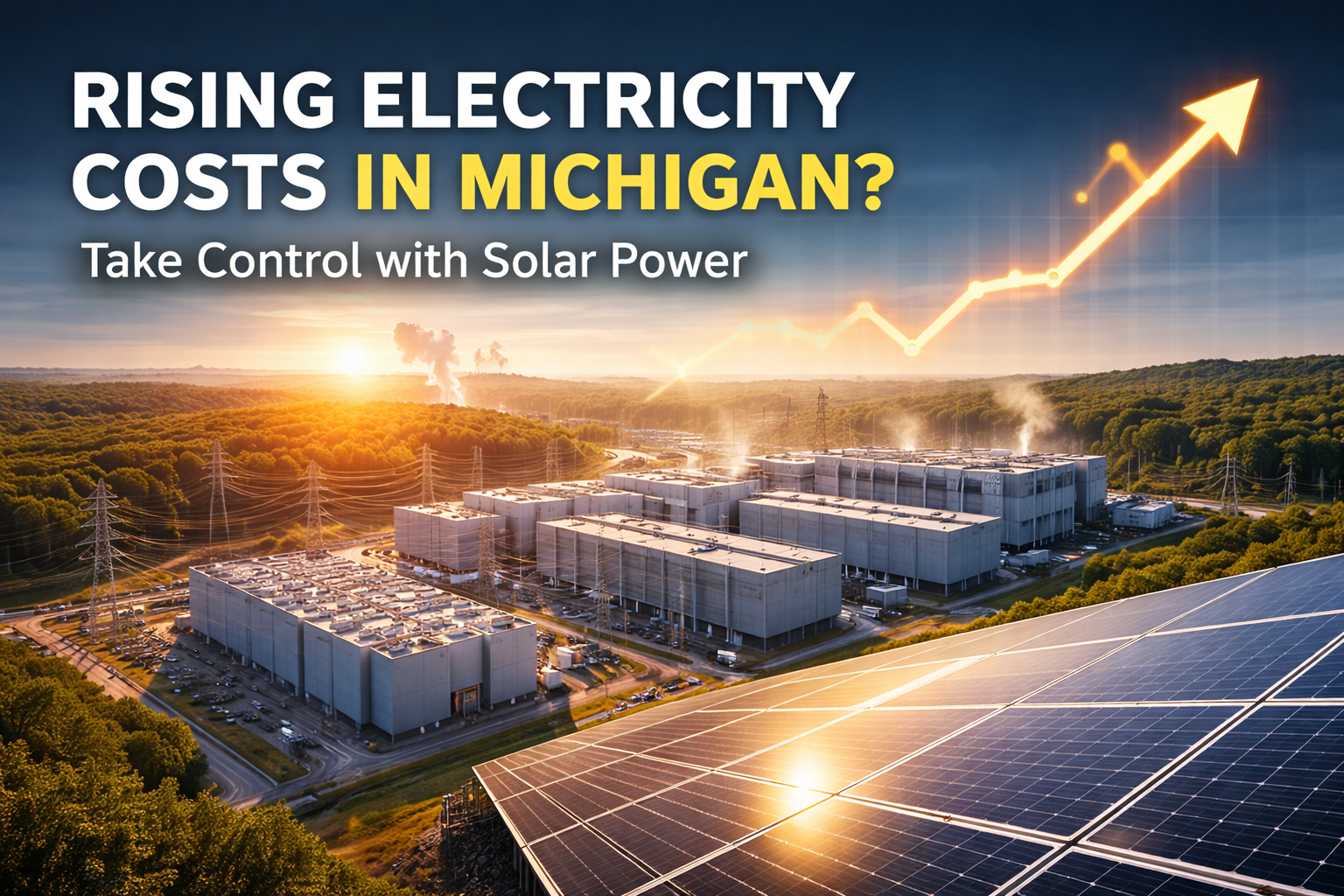
Michigan is on the front edge of a major shift in electricity demand.
Driven by artificial intelligence, cloud computing, and digital infrastructure, large-scale data centers are rapidly expanding across the state. What was once a stable energy environment is becoming far more dynamic and, for many businesses, more expensive.
Understanding what is happening and how to respond is now a strategic decision.
The Scale of What’s Coming
Data centers are not typical commercial users. They are among the most energy-intensive facilities ever built.
A single hyperscale data center can require 100 to 500 megawatts of power, with some approaching 1 gigawatt
Utilities in Michigan are already planning for multiple gigawatts of new demand tied to data center development
In some projections, data centers could account for 40% to 57% of all electricity demand growth in the state by 2030
To put that in perspective, a single large project can consume as much electricity as an entire mid-sized city.
This is not a gradual shift. It is a step change in how the grid is used.
What This Means for Electricity Rates
When demand rises this quickly, the grid has to expand. That expansion comes with real costs.
Michigan is already facing several pressure points:
1. Grid Infrastructure Upgrades
Utilities must build new transmission lines, substations, and generation capacity to support large loads. These costs are often spread across ratepayers.
2. Cost Allocation Uncertainty
A central question in Michigan right now is who pays for this growth. Without clear protections, businesses and residents may absorb part of the cost
3. Potential Rate Increases
Some estimates suggest that a single 1 GW data center could increase electricity rates by 5% to 10% if costs are shared broadly
4. Long-Term System Costs
Over time, data center-driven demand could add billions in new system costs, creating sustained upward pressure on rates
There are efforts underway to design special tariffs and protections, but outcomes are still evolving.
For businesses, that uncertainty is the key risk.
Why This Matters for Michigan Businesses
Electricity has historically been a predictable operating expense. That is changing.
As demand increases:
Rate cases may become more frequent
Capacity and infrastructure costs may rise
Long-term price visibility becomes less certain
Even if policies protect some customers in the short term, the broader trend is clear. Electricity is becoming more strategic and less predictable.
Why Solar Is Becoming a Financial Strategy
This environment is exactly why more Michigan businesses are turning to on-site solar.
Solar is not just about sustainability. It is about control.
1. Lock In a Portion of Your Energy Costs
By generating power on-site, you reduce exposure to future rate increases.
2. Offset Peak Pricing and Demand Charges
Solar production often aligns with daytime peak usage, helping reduce the most expensive energy purchases.
3. Improve Long-Term Financial Predictability
Instead of relying entirely on utility pricing, you control a portion of your energy supply.
4. Capture Strong Federal Incentives
Tax credits and depreciation can significantly improve project returns, especially when paired with proper timing strategies like safe harbor.
5. Hedge Against Structural Change
Even if policies evolve, solar provides a buffer against large-scale shifts in how electricity is priced and delivered.
In short, solar moves energy from a variable expense to a partially fixed one.
Timing Matters More Than Ever
With demand accelerating, timing is becoming a competitive advantage.
Interconnection timelines are lengthening as more projects enter the queue
Equipment and labor demand can increase alongside large infrastructure buildouts
Federal incentive structures may change over time
Safe harbor strategies can lock in today’s tax benefits even if projects are completed later
Businesses that start early have more flexibility and better positioning.
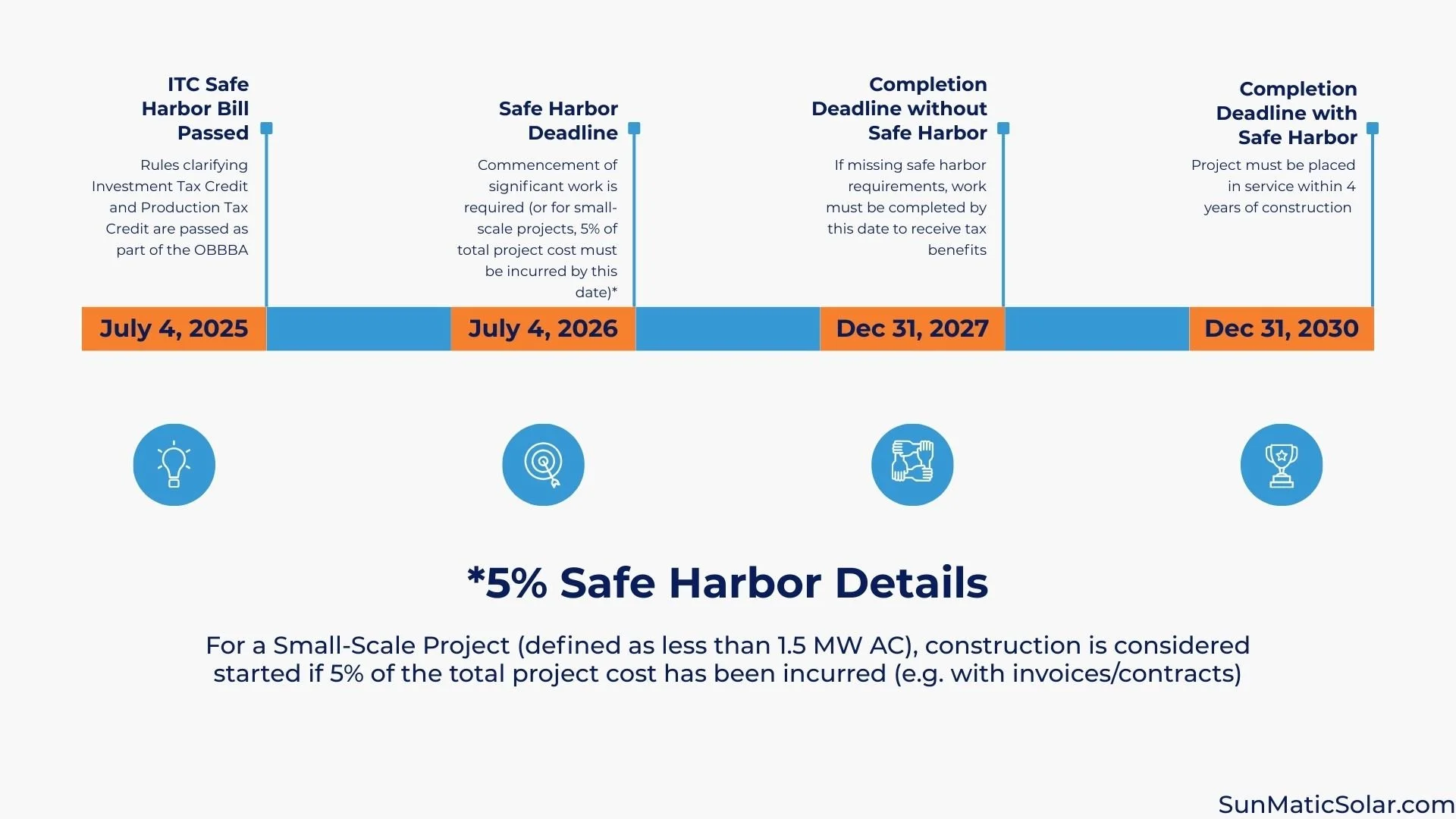
Tax Credits are Expiring Soon
Investment Tax Credit and Production Tax Credit language has strict deadlines that are rapidly approaching.
Commencement of significant work MUST begin by July 4th, 2026. The only caveat is if your project is less than 1.5 MW AC, but even then you must have incurred 5% of the total project cost by that same date.
How SunMatic Solar Helps Michigan Businesses Navigate This Shift
SunMatic Solar works with commercial and industrial clients across Michigan to turn energy from a risk into an opportunity.
Strategic Analysis
Evaluate your current energy usage, utility structure, and exposure to future rate changes.
Custom System Design
Engineer systems that maximize financial return based on your facility and load profile.
Safe Harbor Guidance
Help structure projects to preserve federal incentives and optimize timing.
Full Project Execution
From permitting to installation to utility coordination.
Long-Term Partnership
Ongoing support to ensure system performance and continued value.
The goal is not just to install solar panels. It is to give your business more control over a rapidly changing energy landscape.
Take Control Before the Market Shifts Further
Michigan’s energy market is evolving quickly. Data center growth is accelerating demand, increasing complexity, and introducing new cost pressures.
You cannot control utility rate decisions.
You can control how much you rely on them.
Start with a clear understanding of your options.
Contact SunMatic Solar for a customized savings and feasibility analysis based on your facility, utility, and financial goals.
